

How lid manufacturing changed
Home canning rules aren't static. For decades, the standard test was simple: if the lid popped down and stayed concave, it was safe. But modern lids are different. Manufacturers now use thinner steel and sealing compounds designed for a single heat cycle. These materials don't always bounce back for a second round.
The question of whether to reuse canning lids is driven by a few factors. Economic considerations are certainly at play – lids aren’t cheap, and the cost adds up, especially for those who can large quantities of food. More recently, there’s a growing interest in sustainable canning practices, and reducing waste is a key part of that. People are looking for ways to minimize their environmental impact, and reusing lids seems like an obvious solution.
Despite the long history of successful lid reuse, safety standards have become more stringent. While many canners have reused lids for years without incident, the potential for seal failure and subsequent spoilage is a real concern. It's a shift from 'it's probably okay' to 'is it worth the risk?' given our current understanding and manufacturing processes. This isn't to say older methods were inherently dangerous, but we have a better grasp of the factors that contribute to safe canning now.
What the experts say
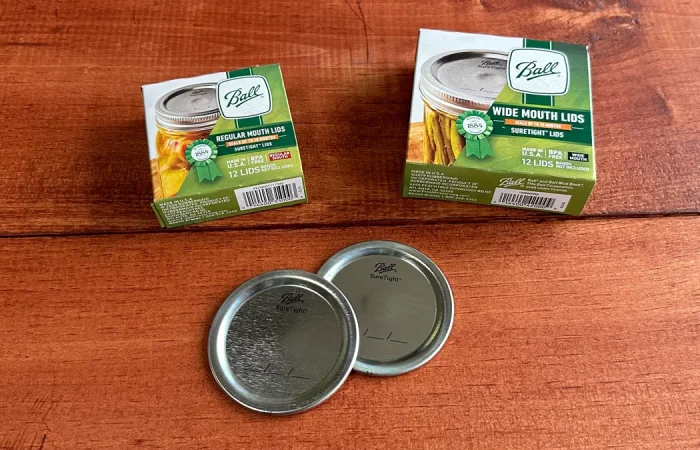
Both North Dakota State University (NDSU) Extension and the University of California Agriculture and Natural Resources (UC ANR) currently recommend against reusing canning lids. NDSU states plainly, “Don’t Be Tempted to Reuse Canning Lids.” Their reasoning centers on the fact that the sealing compound – the rubbery material around the edge of the lid – is designed for one-time use. This compound is crucial for creating an airtight seal, and its effectiveness diminishes with each use.
UC ANR echoes this sentiment, advising that lids should not be reused even if they appear to be in good condition. They explain that the sealing compound can become deformed or lose its pliability after being heated and cooled during the canning process. This can result in a weak or incomplete seal, allowing air and microorganisms to enter the jar. The risk, they point out, isn't just about the lid itself, but the potential for spoilage of the food within.
It’s important to understand why these recommendations are made. It's not simply a matter of being overly cautious. The sealing compound is engineered to create a specific level of compression when heated. Repeated use compromises that compression, making it less reliable. While a jar might look sealed, it may not be truly airtight. This is where the risk of botulism comes into play, though it's important to remember that a failed seal doesn’t automatically mean botulism is present – just that the risk is increased.
The mechanics of seal failure
A standard canning lid is comprised of two main parts: the flat lid itself and the screw band. The screw band holds the lid in place during processing, but the seal is created by the lid and its sealing compound. This compound, typically a plastisol (a type of PVC), is designed to soften and mold to the irregularities of the jar rim when exposed to heat. This creates an airtight barrier that prevents the entry of air and microorganisms.
During the canning process, the food inside the jar expands as it heats up. This forces air out of the jar, and as the jar cools, a vacuum is created. The sealing compound, having softened, conforms to the jar rim and creates a tight seal that maintains this vacuum. However, this process puts stress on the compound. Repeated heating and cooling cycles can cause it to become brittle, cracked, or lose its elasticity.
Even minor imperfections in the jar rim – tiny chips, nicks, or uneven surfaces – can compromise the seal. These imperfections create gaps that the sealing compound struggles to fill effectively. The same goes for the lid itself. Any warping or damage to the lid can prevent it from forming a complete seal. It's a combination of material fatigue and physical factors that contribute to lid failure.
Beyond the Seal: Botulism Risk
Botulism is a serious illness caused by a toxin produced by the bacterium Clostridium botulinum. This bacterium thrives in low-oxygen environments, such as improperly canned foods. It produces a neurotoxin that can cause paralysis and even death. While botulism is rare, it’s a very real concern when it comes to home canning.
A failed seal creates an anaerobic (low-oxygen) environment within the jar, which is ideal for Clostridium botulinum to grow. However, it's crucial to understand that a failed seal doesn't automatically mean botulism is present. Other factors, such as the acidity of the food and the presence of competing microorganisms, also play a role. High-acid foods (like pickles or jams) are less susceptible to botulism than low-acid foods (like green beans or corn).
The best way to minimize the risk of botulism is to follow tested recipes and processing times from reliable sources, such as the USDA Complete Guide to Home Canning (). These recipes have been scientifically validated to ensure that the food is heated to a temperature high enough to destroy any Clostridium botulinum spores that may be present.
New lid tech on the horizon
The limitations of traditional two-piece canning lids have spurred innovation. Several companies are exploring new materials and designs to create more durable and reusable lids. One area of focus is on developing alternative sealing compounds that are less prone to degradation. Some prototypes utilize silicone-based materials, which are known for their heat resistance and flexibility.
Another approach involves lids with built-in indicators of a successful seal. These indicators change color or shape to visually confirm that a vacuum has been created. This would eliminate the guesswork involved in checking seals and provide greater peace of mind. There are also designs incorporating a single-piece lid and band, simplifying the canning process and potentially reducing the risk of seal failure.
Most of these designs are still in the prototype stage. Whether they hit the shelves depends on if they can stay affordable. For now, we're stuck with the standard disposable flats or moving to specialized glass systems.
- Silicone compounds that survive multiple heat cycles.
- Lids that change color to show a vacuum has formed.
- Single-piece lid and band designs for simplicity.
Alternative Lid Solutions
- Ball Canning - Ball, a trusted name in canning, continues to refine its standard flat lids while also exploring materials science for improved sealing compounds and potentially reusable options, though currently focuses on single-use lids.
- Bernardin - Bernardin, another leading manufacturer, primarily offers traditional two-piece lids. They are actively researching alternative sealing materials and lid designs for enhanced performance and potential reusability, focusing on maintaining safety standards.
- Le Parfait - Le Parfait specializes in glass lids with reusable rubber rings. These lids offer a traditional, reusable option for canning, particularly suited for European-style jars. The glass lids themselves are durable and can be used repeatedly with fresh rubber rings.
- Weck Jars - Weck jars utilize glass lids and rubber gaskets, creating a fully reusable canning system. The glass lids are designed for multiple uses, and only the gaskets require periodic replacement, offering a sustainable canning solution.
- Freshly Preserved - Freshly Preserved offers silicone lids designed as a reusable alternative to traditional metal lids. These lids create an airtight seal when used with Weck jars or jars fitted with compatible rings and are intended for multiple uses.
- Lakewood Canning Co. - Lakewood offers a range of canning supplies, including reusable T-fal style jar lids. These lids utilize a clamp-down mechanism and rubber gasket for sealing, providing a reusable option for certain canning applications.
- Canning Pantry - Canning Pantry sells a variety of reusable canning lids, including those designed for use with standard mason jars. They focus on providing options for those seeking to reduce waste and move away from single-use lids.
The pressure canning debate
This is a tricky area, and I want to be very clear: Just Canning does not endorse reusing lids. However, some canners argue that the risk is slightly lower when using a pressure canner. Pressure canning achieves higher temperatures than boiling water bath canning, which may result in a more complete seal, even with a slightly compromised lid. The higher pressure also forces more air out of the jar, potentially creating a stronger vacuum.
That said, it's still not a guarantee of safety. Even with a pressure canner, a degraded sealing compound can still fail over time. The increased temperature and pressure don’t magically restore the lid’s original integrity. This is a matter of individual risk tolerance, and it’s essential to weigh the potential benefits against the potential consequences.
It’s important to recognize this is a gray area. While a pressure canner might offer a slightly higher margin of safety, it doesn't eliminate the risk of seal failure and spoilage. If you choose to reuse lids, even with a pressure canner, do so with extreme caution and monitor your jars closely for any signs of seal failure.
Sustainable Canning: Alternatives to New Lids
If you’re looking for more sustainable canning options, there are alternatives to relying solely on traditional two-piece lids. Weck jars are a popular choice. These jars use glass lids and reusable rubber seals, eliminating the need for disposable metal lids altogether. While Weck jars are more expensive upfront, they can last for many years with proper care.
Silicone lids designed for canning are also emerging as a viable option. These lids are reusable, heat-resistant, and often feature a built-in vent for releasing air during processing. They can be a good alternative for those who want to avoid metal lids but don’t want to invest in Weck jars. However, it's worth checking that these are compatible with your jars.
Choosing reusable canning systems, like Weck jars or silicone lids, reduces waste and minimizes your environmental impact. It's a proactive step towards more sustainable canning practices. Consider the long-term cost savings as well – while the initial investment may be higher, you’ll avoid the ongoing expense of purchasing new lids each year.
Troubleshooting Seal Failures: What to Do
Despite your best efforts, you may occasionally encounter a failed seal after processing. It’s crucial to identify and address this promptly. Signs of a failed seal include a bulging lid, a hissing sound when the jar is opened, or visible leakage around the lid. Don’t ignore these signs – they indicate that the jar is not properly sealed and the contents may be contaminated.
If you discover a failed seal, you have two options: reprocess the food immediately or discard it safely. If you choose to reprocess, use a new lid and follow the original recipe and processing time. If the food has been at room temperature for more than two hours, it’s best to discard it. When in doubt, throw it out – it’s not worth risking your health.
Here’s a quick checklist for checking seals after processing:
• Listen for a popping sound as the jars cool – this indicates a successful seal.
• Press down on the center of the lid – it should not flex up and down.
• Visually inspect the lid for any signs of bulging or leakage.
No comments yet. Be the first to share your thoughts!