
Smart canning basics
For generations, home canning has been a way to preserve the bounty of the garden and enjoy seasonal flavors year-round. It’s a skill passed down through families, often involving large pots, careful timing, and a bit of anxious hovering. But things are changing. We're seeing a rise in 'smart' canning machines promising to simplify and even automate this traditional process. It’s a natural progression, really—applying technology to a practice that’s been around since the early 19th century, when Nicolas Appert first demonstrated food preservation in glass jars.
A machine doesn't guarantee safety. You still need to understand acidity levels and processing times. These tools just handle the tedious parts like holding a steady temperature or watching the clock so you don't have to hover over the stove.
There’s been some skepticism, naturally. Some seasoned canners worry about losing control or relying too heavily on technology. Others question whether the cost justifies the benefits. I think those are fair concerns. A smart canning machine is an investment, and it’s not a substitute for learning the fundamentals. It’s a tool that, when used correctly with a solid understanding of canning principles, can be a valuable addition to a home kitchen.
The USDA and the National Center for Home Food Preservation (NCHFP) are still the gold standards for safe canning practices. No machine can override the need to adhere to their guidelines. These machines are meant to support those standards, not supersede them. It’s about enhancing the process, not reinventing it.
What makes a machine smart?
The term 'smart' gets thrown around a lot these days, but when it comes to canning machines, it refers to a specific set of features that go beyond basic automation. It’s not simply a machine that fills and seals jars; it’s about incorporating sensors, pre-programmed settings, and often, connectivity to make the process more precise and user-friendly. We're talking about machines that actively monitor and adjust conditions during the canning process.
Key features include precise temperature monitoring. These machines don’t just heat; they maintain a specific temperature throughout the processing time, crucial for ensuring food safety. Pressure regulation is another important aspect, especially for low-acid foods. Smart machines often have built-in pressure sensors and automatic adjustments to maintain the correct pressure levels. Automatic timers eliminate the need for manual timing, reducing the risk of under- or over-processing.
App integration is becoming increasingly common. Some machines allow you to control and monitor the canning process remotely via a smartphone app. This can be convenient for multitasking or simply keeping an eye on things from another room. However, I think this is one area where the 'smart' label can feel a bit overblown. A well-designed machine should be reliable on its own, without requiring constant app supervision. It’s about convenience, not necessity.
These features aim to address common canning errors, like inconsistent temperatures, inaccurate processing times, and improper pressure levels. But it's important to remember that even the smartest machine relies on accurate input—correct jar preparation, proper headspace, and following tested recipes. A machine can’t fix a flawed recipe or a poorly prepared jar.
Top smart canning machines for 2026
The 2026 market has a few standout options for different budgets. Here are the machines I've been tracking.
The Cannular Fully Auto is a single-lane machine that handles filling and seaming. It's a solid value if you're moving through large batches and want consistent seals without manual cranking. It does require some maintenance and works best if you stick to one jar size.
American Canning Machines AT-1: This is a popular choice for beverage canning, but can be adapted for food preservation. The AT-1 (available at ) offers precise filling and seaming capabilities. Pros: Durable construction, accurate filling, suitable for various jar sizes. Cons: Higher price point, more complex setup, primarily designed for beverages. Best for: Serious canners looking for professional-grade equipment.
AutoCan Pro 5000: This model boasts advanced temperature and pressure control, along with app integration. It features pre-programmed settings for various food types, simplifying the process for beginners. Pros: User-friendly interface, precise control, remote monitoring. Cons: Expensive, potential software glitches, requires a stable internet connection. Best for: Tech-savvy canners who want maximum convenience.
PrecisionCanning SmartCan 2.0: A mid-range option that focuses on reliability and ease of use. It offers accurate temperature regulation and a clear digital display. Pros: Good balance of features and price, easy to clean, durable construction. Cons: Limited automation compared to higher-end models, no app integration. Best for: Intermediate canners who want a reliable machine without unnecessary complexity.
HomeHarvest AutoSeal: This machine prioritizes safety, with multiple built-in safeguards to prevent over-pressurization or overheating. It also features a self-cleaning cycle. Pros: Enhanced safety features, easy maintenance, compact design. Cons: Slower processing time, limited capacity, basic functionality. Best for: Beginners and those prioritizing safety above all else.
CanningTech SmartBatch: Designed for larger batches, the SmartBatch features multiple filling heads and an automated jar indexing system. It’s ideal for those who can large quantities regularly. Pros: High processing capacity, efficient operation, consistent results. Cons: Significant investment, requires dedicated space, complex setup. Best for: High-volume canners and small-scale food businesses.
EverSeal Compact: A more affordable entry point into smart canning, the EverSeal Compact offers basic automation and temperature control. It’s a good option for those who want to try out smart canning without a significant investment. Pros: Affordable, easy to use, compact design. Cons: Limited features, slower processing time, less precise control. Best for: Beginner canners and those on a budget.
Featured Products

Digital display for precise control · Water bath canning capable · 10 built-in safety features
This digital pressure canner offers precise control and enhanced safety features, making it a reliable choice for large-batch home preservation.

11-in-1 functionality including air frying and pressure cooking · Comes with multicooker lids for versatile cooking · Functions include frying, steaming, slow cooking, and dehydrating
The Instant Pot Duo Crisp provides exceptional versatility, combining pressure cooking with air frying and numerous other functions, supported by a vast recipe library.
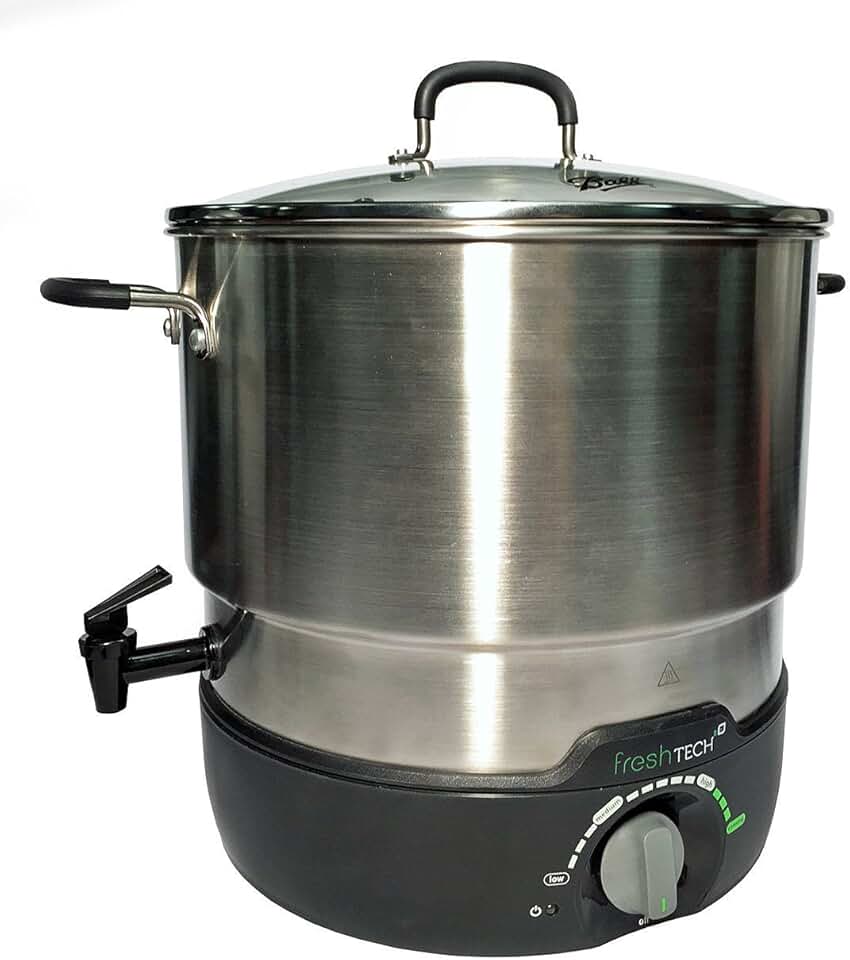
Electric water bath canning · Multi-cooker functionality · Designed for ease of use in home preservation
This electric water bath canner simplifies the canning process with its dedicated design and multi-cooker capabilities, ideal for efficient home preservation.
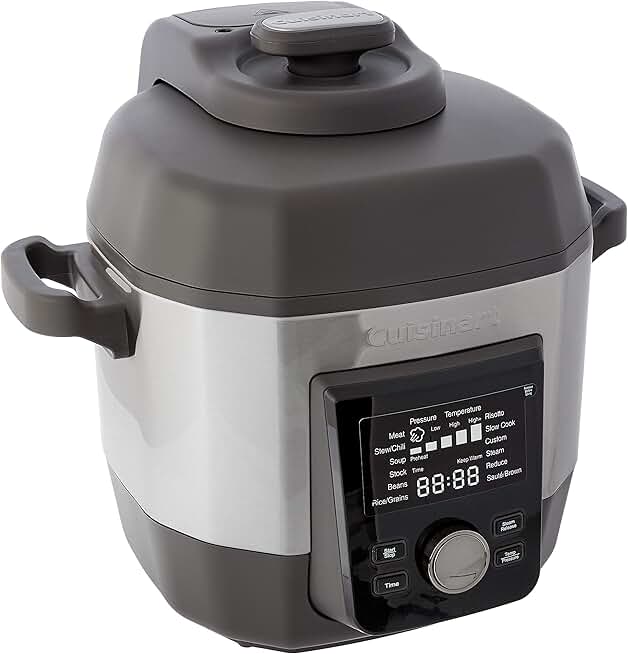
6-quart capacity · High pressure multicooker · Designed for efficient cooking and preservation
The Cuisinart CPC-900 offers a high-pressure multicooker experience at an accessible price point, streamlining meal preparation and preservation.

6.3-quart capacity · Durable stainless steel construction · Easy-open lid with a secure locking system
This T-Fal Clipso pressure cooker combines durability, safety, and user-friendly features like an easy-open lid and adjustable pressure, making it a budget-friendly option for efficient cooking.
As an Amazon Associate I earn from qualifying purchases. Prices may vary.
Specs that actually matter
When comparing canning machines, it's easy to get lost in a sea of technical specifications. Here’s a breakdown of the key terms to look for and what they actually mean. Understanding these specs will help you choose a machine that meets your specific needs.
Processing Capacity: This refers to the maximum jar size the machine can handle, usually expressed in quarts. A machine with a 1-quart capacity can process jars up to that size. It doesn't necessarily indicate how many jars it can process at once, just the maximum volume of a single jar. Heating Element Wattage: Higher wattage generally means faster heating, but it also consumes more energy. A wattage of 1500W is typical for a standard home canning machine.
Pressure Gauge Accuracy: For pressure canning, accuracy is paramount. Look for machines with digital pressure gauges that are calibrated to within +/- 1 PSI. Analog gauges can be less accurate and may require periodic recalibration. Material Construction: Stainless steel is the preferred material for canning machines, as it’s durable, corrosion-resistant, and easy to clean. Avoid machines with plastic components that may leach chemicals into the food.
Some specs are less important than others. 'Automated features' is a broad term that doesn't tell you much about the machine’s actual capabilities. Similarly, 'digital display' is a nice-to-have, but doesn’t necessarily equate to better performance. Always prioritize specs related to safety and accuracy. Don’t forget to consult the USDA and NCHFP guidelines (fsis.usda.gov and nchfp.uga.edu) to ensure the machine meets their recommendations.
Safety and best practices
Don't let the automation make you lazy. You still have to check your headspace and vent the canner properly. I always keep the NCHFP guidelines open on my tablet because no software update replaces verified science.
Potential safety concerns with automated systems include over-reliance on the machine. Don’t assume that a machine will automatically correct errors—always double-check jar preparation, headspace, and venting procedures. Another concern is the potential for mechanical failure. Regularly inspect the machine for any signs of damage or malfunction. If you notice anything unusual, discontinue use and consult the manufacturer.
Proper jar preparation is essential. Jars must be clean, sterilized, and free of cracks or chips. Headspace—the empty space between the food and the lid—is also critical. Follow the recommended headspace guidelines for each type of food. Venting procedures vary depending on the type of canner, but it’s important to allow air to escape during processing. Failure to do so can result in improper seals.
Always use tested recipes from reliable sources. Don’t experiment with processing times or ingredients. And remember, if a seal fails, discard the food. It’s better to be safe than sorry. Safety is paramount, and no convenience is worth risking foodborne illness.
- Sterilize your jars every single time.
- Follow recommended headspace guidelines.
- Ensure proper venting during processing.
- Use tested recipes from reliable sources.
- Inspect jars for proper seals after processing.
Steam Canning & Smart Machines
Steam canning is an alternative to traditional water bath canning, using less water and potentially reducing processing times. However, it's not suitable for all types of foods. The NCHFP (nchfp.uga.edu) recommends steam canning only for high-acid foods, such as jams, jellies, and pickles. It’s crucial to understand these limitations before attempting steam canning.
The compatibility of steam canning with smart machines is still evolving. Some machines are designed specifically for steam canning, with built-in steam generators and precise temperature control. Others may be adaptable, but it's important to check the manufacturer's recommendations before using them for steam canning. I'm not sure whether the added 'smart' features offer a significant advantage in steam canning compared to traditional methods.
If you're considering steam canning with a smart machine, ensure the machine has accurate temperature monitoring and can maintain a consistent steam temperature. It's also important to follow the NCHFP's guidelines for steam canning, including proper jar preparation, headspace, and processing times. Always prioritize safety and use tested recipes.
Looking Ahead: The Future of Smart Canning
The future of smart canning technology is likely to involve even more advanced sensors, potentially capable of detecting subtle changes in food quality or acidity. AI-powered recipe recommendations could personalize the canning process based on your preferences and available ingredients. Integration with smart home ecosystems could allow you to control and monitor your canning machine remotely via voice commands or a central smart home hub.
However, it’s important to remain grounded in reality. These advancements will likely come with a higher price tag, and the core principles of safe canning will remain essential. The goal isn’t to replace human knowledge and skill, but to enhance it with technology. I believe we’ll see a continued focus on safety, convenience, and consistency in the years to come.
No comments yet. Be the first to share your thoughts!